Basic Information
| Item | Details |
|---|---|
| Full Name | Paul Cushing Child |
| Born | January 15, 1902, Montclair, New Jersey, USA |
| Died | May 12, 1994, Lexington, Massachusetts, USA |
| Occupations | Civil servant, diplomat (U.S. Foreign Service/USIS), artist, photographer |
| Wartime Service | Office of Strategic Services (OSS), 1942–1945 |
| Languages | English, French (working proficiency) |
| Spouse | Julia Carolyn McWilliams Child (m. September 1, 1946) |
| Children | None (embraced extended family through Julia’s relatives) |
| Noted For | Cultural diplomacy in postwar Europe; photography and editorial support of Julia Child’s work |
| Residences Abroad | China, India, Ceylon (Sri Lanka) during WWII; Paris and Marseille (late 1940s–1950s) |
| Final Resting Place | Santa Barbara Cemetery, California (with Julia Child) |
Early Life and Cultural Roots
Paul Cushing Child arrived in the world on January 15, 1902, in Montclair, New Jersey, a twin son in a family that would soon migrate to Boston. His mother, Bertha May Cushing, a trained contralto singer, brought an artistic pulse to the household; museums, concerts, and sketchbooks were as common as bread and butter. His father, Charles Tripler Child, worked in real estate—practical ballast to an otherwise bohemian current.
Boston gave Paul a cultural greenhouse. He absorbed the city’s art and ideas, tinkered with photography, and taught himself the vocabulary of line, light, and proportion. He did not pretend to be an academic thoroughbred; he preferred learning by doing, a trait that would carry him from studio lights to diplomatic corridors.
Tall and wiry, with keen eyes behind glasses, he had the look of a flâneur who noticed everything—the texture of market baskets, the slant of dusk on a stone quay, the steam rising from a stockpot. That attention to detail, paired with a measured temperament, would become his signature.
Wartime Service and a Fateful Meeting
World War II reshaped Child’s trajectory. In 1942 he joined the OSS, the nation’s wartime intelligence service, working in the Asia theater—China, India, and Ceylon—on mapping, communications, and cultural operations. The assignments were varied and demanding, blending logistics with inventive problem-solving.
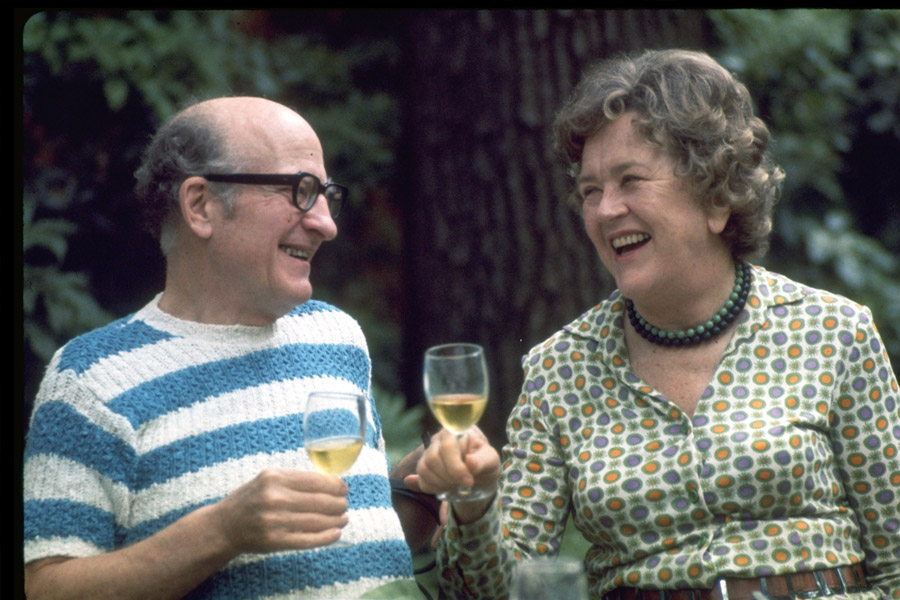
In 1944, amid the humid bustle of Kunming, he met Julia McWilliams, a towering and witty OSS colleague whose curiosity matched his own. Their friendship sparked over meals, maps, and the work of the day, growing into a partnership grounded in humor and shared appetites. They married on September 1, 1946, in New York, stepping into postwar life with passports ready and palates primed.
Marriage, Travel, and the Making of a Culinary Revolution
After the war, Paul entered the U.S. Foreign Service (U.S. Information Service/USIS), with postings that centered on cultural affairs. France became their great classroom. Stationed in Paris and Marseille between 1948 and the mid-1950s, the couple walked markets at dawn, dined with friends, and talked endlessly about taste, technique, and terroir. Paul photographed, edited, and observed; Julia enrolled at Le Cordon Bleu and started the long, exacting journey that led to Mastering the Art of French Cooking (1961).
By 1961, as the first volume neared publication, Paul retired from the foreign service and the couple established themselves in Cambridge, Massachusetts. Television soon came calling. When The French Chef debuted in 1963, Paul was under the lights too—behind the camera, coaxing focus, composing shots, and occasionally crawling across the studio floor with cue cards. He was the steady bass line to Julia’s trumpet, setting tempo and keeping time.
They chose a life without children, cherishing instead a constellation of nieces, nephews, and friends who came to their table. Holidays and summers became a ritual of letters, recipes, and conversation—a chosen family amplified by good humor and good stock.
Art, Photography, and a Life in Images
Paul’s artistry was a slow burn rather than a public blaze. He painted in modernist modes and photographed with a craftsman’s eye—never flashy, always precise. His images of Julia in Paris and Cambridge captured a working kitchen as theater: copper pans like cymbals, onions as actors, knives as dialogue. His photographic and editorial hand shaped the public’s view of Julia at key moments, and later exhibits in culinary circles celebrated his contribution.
Family Snapshot: The Circle Around Paul
| Name | Relationship | Notes |
|---|---|---|
| Charles Tripler Child | Father | Real estate; New England roots; provided early structure. |
| Bertha May Cushing | Mother | Contralto singer; fostered Paul’s artistic sensibility. |
| Charles J. “Charlie” Child | Twin brother | Artist-writer type; close lifelong bond. |
| Julia Carolyn McWilliams Child | Wife | Culinary trailblazer; married 1946; creative co-conspirator. |
| Alex Prud’homme | Great-nephew by marriage | Writer who shared in family traditions; later chronicler of Julia’s story. |
The marriage stood at the center, but the wider circle mattered: letters, visits, and mentoring stitched together a durable fabric of affection.
Career Milestones and Timeline
| Year | Event | Details |
|---|---|---|
| 1902 | Birth | Montclair, NJ; one of twin boys. |
| 1907 | Move to Boston | Artistic upbringing under his mother’s wing. |
| 1920s–1930s | Early creative work | Photography and painting; self-taught aesthetic discipline. |
| 1942–1945 | OSS service | Asia postings; mapping, cultural operations. |
| 1944 | Meets Julia McWilliams | OSS colleagues in Kunming, China. |
| 1946 | Marriage | September 1, New York City. |
| 1948–1956 | USIS in France | Cultural affairs in Paris and Marseille; culinary explorations. |
| 1961 | Retirement from government | Move to Cambridge; focus on Julia’s projects. |
| 1963 | The French Chef launches | Paul photographs, advises, and supports production. |
| 1970s–1990s | Later years | Health challenges; continued creative engagement as able. |
| 1994 | Death | May 12, Lexington, MA; later interred with Julia in Santa Barbara. |
Finances and Later Years
Paul earned a civil servant’s salary and a pension—steady but not extravagant—and preferred experiences over accumulation. As Julia’s books and television brought broader success, comfort increased, yet their household still favored tools and books over luxury. In later years Paul faced illness that affected speech and mobility; adaptations at home and a strong network of friends helped him remain present for the rituals he loved: a good photograph, a well-lit room, a well-seasoned stew.
Cultural Mentions in Recent Years
Interest in Paul has surged whenever Julia’s life is revisited in documentaries, series, and anniversaries. Retrospectives highlight their meeting in the OSS, their roving postings through postwar France, and the way his lens and editorial instincts helped shape Julia’s on-air ease. Social media posts around wedding anniversaries or show debuts tend to cast him as the “unsung partner,” the backstage craftsman who kept the machinery humming while the star shone.
FAQ
Did Paul Cushing Child and Julia Child have children?
No, they did not have biological children; they embraced an extended family of nieces, nephews, and close friends.
How did Paul meet Julia Child?
They met in 1944 while both were serving in the OSS in Kunming, China.
What was Paul Child’s profession?
He served as a U.S. government cultural officer (USIS) and was also an artist and photographer.
Was Paul involved in Julia’s television career?
Yes; he photographed, advised, and informally produced elements of The French Chef, shaping its look and pace.
Where did Paul and Julia live during their foreign service years?
Primarily in France—Paris and Marseille—between 1948 and the mid-1950s.
What was Paul’s role in the OSS?
He worked on mapping and cultural operations in the Asia theater during World War II.
How tall was Paul Child?
Contemporaries describe him as tall and lean, approximately six feet in height.
Where are Paul and Julia buried?
Their ashes are interred at Santa Barbara Cemetery in California.
Did Paul have siblings?
Yes, including a twin brother, Charles J. Child, with whom he shared a close bond.
What kind of art did Paul create?
He painted in modernist styles and was an accomplished photographer, particularly known for images of Julia at work.