Basic Information
| Field | Details |
|---|---|
| Full name | Khadija Guled |
| Known for | Mother of rapper French Montana (Karim Kharbouch); central figure honored in the documentary “For Khadija” |
| National origin | Morocco |
| U.S. arrival | Mid–1990s (around 1996) |
| Primary U.S. home | The Bronx, New York (late 1990s onward) |
| Public role | Private individual, matriarch in an immigrant family story |
| Notable public appearances | Tribeca Festival premiere of “For Khadija” (2023) |
| Occupation (publicly described) | Informal and physically demanding jobs; caregiver and head of household during father’s absence |
| Financial disclosures | None publicly available |
From Casablanca to the Bronx: A Family Timeline
The story of Khadija Guled is the story of a mother who steered a family through migration, separation, and economic strain—and watched her eldest son translate those years into art, success, and public gratitude.
- 1980s–mid-1990s: Life in Morocco, with the family rooted near Casablanca.
- 1996 (approx.): Emigration to the United States with her children; the Bronx becomes home.
- Late 1990s–2000s: Raising three boys largely on her own; periods of welfare reliance; string of under-the-table jobs to keep the household afloat.
- 2012–present: With her eldest son’s music career taking flight, the family steps into public view sparingly, usually around milestones.
- 2023: Her story becomes the emotional center of the feature documentary “For Khadija,” which premieres at Tribeca and later streams widely.
Timeline at a glance
| Year/Period | Milestone |
|---|---|
| Pre-1996 | Family life in Morocco, outside Casablanca |
| ~1996 | Move to New York City; settling in the Bronx |
| Late 1990s–2000s | Single-mother years; informal work; public assistance |
| 2012–2020s | Eldest son’s mainstream success; family stability grows |
| 2023 | “For Khadija” premieres at Tribeca; red-carpet appearance |
The Family She Raised
Khadija’s family forms the constellation around which her story turns. Each name carries a slice of her journey—sacrifice, faith, and the day-to-day resolve of a parent who refused to let hardship harden her children.
- Karim Kharbouch (French Montana) — Son
Born in 1984 in Morocco, Karim became known worldwide as French Montana. He has credited his mother’s sacrifices as a foundation for his career and dedicated the documentary “For Khadija” to her. - Ayoub (Ayoub Kharbouch) — Son
A younger brother who has occasionally stepped into the music and creative orbit of his older sibling, with public support and mentorship from French. - Zack (Zack Kharbouch) — Son
Another younger brother, visible in family posts and appearances, part of the close-knit sibling circle that grew up in the Bronx. - Abdela Kharbouch — Father of her children
Public profiles identify Abdela as the father; accounts note periods of absence and years spent in Morocco while Khadija raised the boys in New York. - Kruz Kharbouch — Grandson
Son of French Montana, often seen in family photographs and features; a reminder that Khadija’s story now spans three generations.
Family snapshot
| Person | Relation to Khadija | Public notes |
|---|---|---|
| French Montana (Karim) | Son | Internationally known rapper; dedicated “For Khadija” to his mother |
| Ayoub Kharbouch | Son | Publicly identified younger brother; mentored by French |
| Zack Kharbouch | Son | Publicly identified younger brother; features in family content |
| Abdela Kharbouch | Father of her children | Noted as frequently absent; periods living in Morocco |
| Kruz Kharbouch | Grandson | Son of French Montana |
Motherhood Under Pressure
In the late 1990s, the Bronx wasn’t merely a backdrop—it was a crucible. Khadija took on the jobs available to her: cash-based shifts, market work, physically demanding tasks without benefits, legal cushioning, or guarantees. The family relied on welfare when it had to. She juggled rent, meals, school, and safety, with the calculations of a field general and the heart of a poet. For her children, she built a perimeter against chaos. For herself, she asked almost nothing.
Those hard seasons forged the family’s rhythm. One son gravitated toward music, the others toward the hustle and kinship that comes with living shoulder-to-shoulder in tight quarters. The story is simple and mythic at once: a mother finds a way, again and again, until her children can walk forward under their own power.
“For Khadija”: When Gratitude Becomes a Film
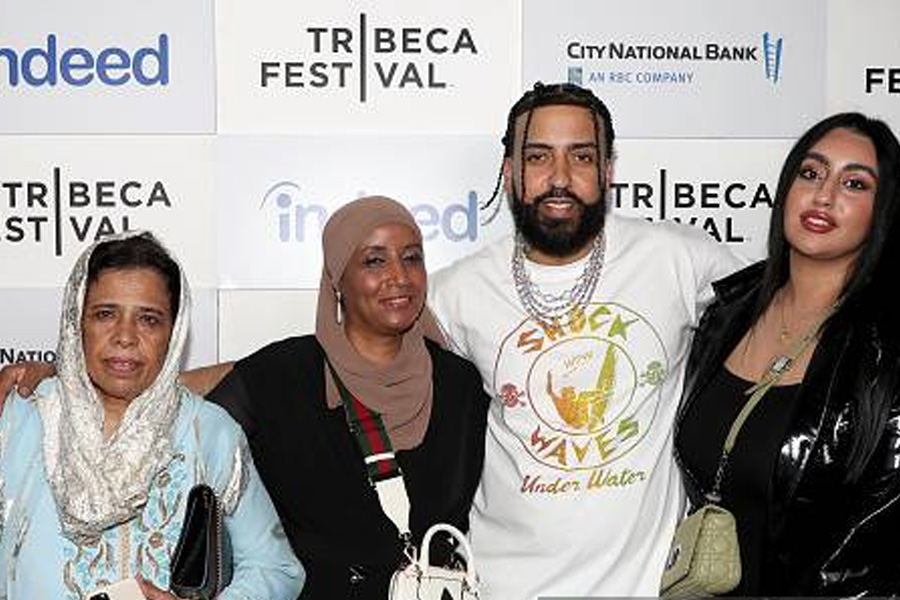
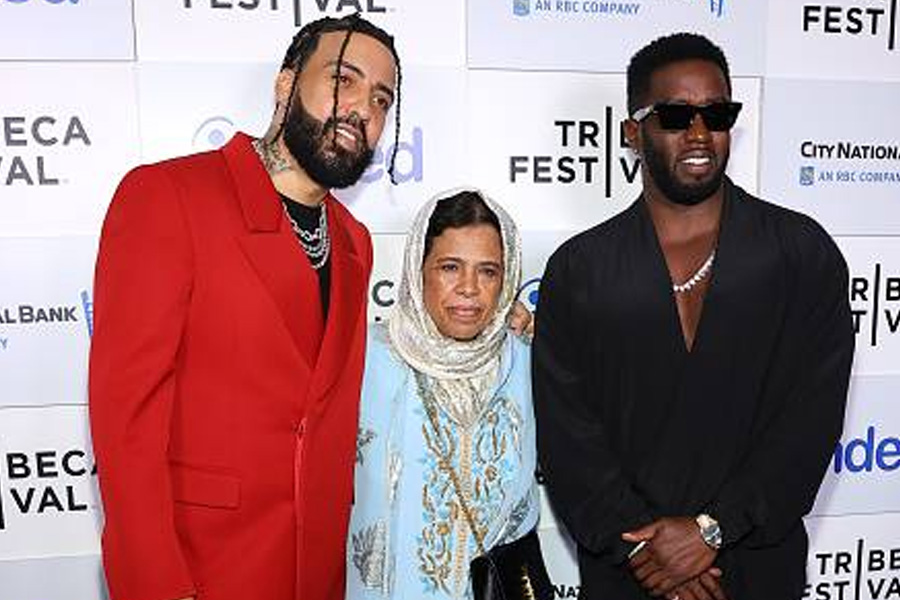
In 2023, that private history stood under bright theater lights. The feature documentary “For Khadija” framed the family’s immigration, fracture, and perseverance through the lens of a son honoring his mother. The film premiered at the Tribeca Festival with red-carpet images of mother and son—a quiet victory lap for years that, for most families, would have remained unrecorded.
The documentary doesn’t attempt to build a public persona for Khadija. Instead, it renders her as the household’s axis: the one who keeps the orbit stable when gravity fails. Distribution on a major streaming platform allowed the story to reach the same global audience that embraced French Montana’s music—now with the matriarch at the center, not the margins.

Work, Money, and the Truths Between the Lines
Public accounts emphasize what Khadija did, not what she earned. They describe informal labor, intermittent public assistance, and a mother’s calculation to stay in the United States with her boys even when the family split across continents. There are no public financial disclosures for her, no tidy footnotes of salary or savings. What’s visible is the outcome: three sons raised, a grandson adored, and the lasting impression of a parent who mortgaged her body and time to buy her children a future.
The Bronx Years: Grit by the Block
The Bronx sharpened the family’s instincts. School deadlines, street-level risks, and the relentless calculus of rent and groceries shaped teenage dreams into adult goals. In that crucible, artistry found its spark. French Montana’s rise is inseparable from those blocks, but those blocks were navigable because Khadija made them so. She was the steady drum behind the melody—felt, not always seen.
Public Appearances and Mentions
Khadija rarely appears in public on her own. When she does, it is in the context of family milestones: premieres, festival appearances, photographed moments where her presence is a statement of gratitude more than celebrity. In 2023, her walk down a premiere carpet signaled a full-circle turn—an immigrant mother who once slipped into work by side doors is now escorted through a front entrance lined with cameras. The story remains grounded, but the vantage point has expanded.
What Remains Unpublished
Some details about Khadija are intentionally opaque. Her precise date of birth, comprehensive employment history, and current private life are not documented in public records intended for broad distribution. The known contours of her story are enough: Morocco to the Bronx, a household helmed by a single mother, and a son who lifted that history into the cultural conversation.
FAQ
Who is Khadija Guled?
She is the mother of rapper French Montana and the central figure honored in the documentary “For Khadija.”
When did she move to the United States?
She moved with her children in the mid-1990s, settling in the Bronx around 1996.
How many children does she have?
She is publicly known as the mother of three sons: Karim (French Montana), Ayoub, and Zack.
Is she featured in the documentary “For Khadija”?
Yes, the film centers her story and includes her presence at its 2023 premiere.
What kind of work did she do in the U.S.?
Public accounts describe informal, physically demanding jobs and periods of relying on public assistance.
What is her connection to Kruz Kharbouch?
Kruz is her grandson, the son of French Montana.
Is there public information about her finances?
No, there are no public financial disclosures about her personal assets or income.
Who is the father of her children?
Public profiles identify Abdela Kharbouch as the father, with accounts noting that he lived in Morocco for periods while the family remained in the U.S.